
Close to God
Read Bulletin
Sermon
The Question We All Ask
The book When Bad Things Happen to Good People was written by Rabbi Harold Kushner after his three-year-old son was diagnosed with a rare disease that caused rapid aging and an early death. The title of the book expresses a question that many of us ask at some point in our lives: Why do bad things happen to good people?
Why did I get cancer? Why did this happen to my child? Why did I lose my job? Why do I have to go through this loss? A very common question: “Why me?” and we ask this question in anger, through tears and without words. We simply become tired, discouraged and begin to lose hope.
I remember preaching one of my first sermon as a student from this very passage.
And after all these years as a minister, I must admit that I still don’t find the question easy to answer. If anything, it may have become more difficult. Because the longer we live, the more we realise that life does not always work according to the simple rules we wish it would follow. We tent to see live as a type of rewards chart or checklist. We need to do what is right, serve God and try to live like Jesus.
And yet, sometimes things happen to us that we simply cannot understand.
That is exactly where we meet Asaph in Psalm 73.
“God is good…” — But What I See Doesn’t Make Sense
Asaph begins the Psalm with a statement of faith: “Surely God is good to Israel, to those who are pure in heart.” This is what Asaph knows. But then he begins to describe what he sees and what he sees confuses him. He looks at people who do not take God seriously – they seem prosperous, healthy, proud with no worries. They even speak against God and yet, their lives seem to be going well. Then he looks at himself and begins to wonder: “What is the point of serving God?” Verse 13 says:
“Surely in vain I have kept my heart pure and have washed my hands in innocence.” In other words: “What is the point?”
And I think we need to be honest here. Sometimes we think Christianity works almost like a contract: I do the right things ? God makes sure my life goes well.
I come to church, pray, give, try to be a good person and live according to God’s will. So surely God should give me a better life. But that’s not always how our life unfolds. We become sick, lose someone we love, our marriage struggles… And we all end up with the question:” Why me?”
The Problem Is Not Simply What Happens to Others
There is something important in Psalm 73. Asaph’s greatest problem is not simply that the wicked are prospering. It is that he is suffering while trying to remain faithful and that feels unfair to him. So much that it begins to affect his entire faith. He says:
“When I tried to understand all this, it troubled me deeply.” We all understand this sentence. There are so many things happening to us and around us we simply cannot understand. We all know the easy answers – we heard them and gave them somewhere in our lives. “Everything happens for a reason”; “God has a plan”; “God will never give you more than you can handle”. Good answers but deep down it’s empty answers. Psalm 73 does something different.
It gives us permission to say: “I don’t understand.” Faith does not mean that we never have questions, does not mean that we never become angry or does not mean that we never wonder whether God has forgotten us. Ps 73 shows us that we can bring those things to God.
“Until I Entered the Sanctuary of God…”
And then comes the turning point of the Psalm. Verse 17: “Till I entered the sanctuary of God”. The world around him do not change, his perspective changes. He begins to see things from God’s perspective. And I think this is where we often make a mistake. We look at our entire lives through the lens of: What is happening right now? If something bad happens: “God isn’t good.” If something good happens: “God is good.” But Psalm 73 invites us not to judge our entire lives only by good or bad, because that’s not our whole story.
Habakkuk Understands This Too
This is why I think Habakkuk 3 fits so beautifully alongside Psalm 73. Habakkuk is also looking at a world that doesn’t make sense. He makes a list of everything bad, everything that can go wrong: “Though the fig tree does not bud and there are no grapes on the vines…” “Yet I will rejoice in the Lord.” This is not denial. Everything is not wonderful. But God is still God.” That is an important distinction.
Christian hope does not mean: “Nothing bad will happen.” It means: “Whatever happens, God will not abandon me.”
What If We Began to Notice God’s Goodness?
I wonder if one of our problems is that we become so focused on what is wrong that we stop noticing the good around us. We ask: “Lord, why did You take this away from me?” But sometimes we forget to ask: “Lord, what have You already given me?” We forget that life itself is grace. Yes, we can list all the bad stuff around us, but we can also list all the grace and good things: our families, friends, church, food on the table, a home, health — even if it is not perfect health, the ability to love, the ability to pray, the ability to know God; the list seems endless. Sometimes we forget that God does not owe us anything. Everything we receive is grace. That does not mean that we should ignore suffering. But it encourages us to see the good alongside the difficult.
The Greatest Gift Is Not What God Gives Us — It Is God Himself
And then we come to the most beautiful part of Psalm 73. “Whom have I in heaven but you? And having you, I desire nothing on earth.” And: “You hold me by my right hand. You guide me with your counsel…” And finally: “But as for me, it is good to be near God.” That is the heart of the Psalm. Not an answer to all our “Why” questions but a reminder that God is close to us. The illness is still real; we still suffer lose but we do not have to understand everything in order to know God is close.
What Does This Mean for Us?
We all struggle with the question: “Why is this happening to me?” I wish I had a good answer today, and I wish Ps 73 had a good answer for us.
But it gives us something else. It reminds us that we’re not superhuman – we’re very much human with all the emotions that comes with it. We are allowed to ask the question, we are allowed to cry, to struggle and say, “I don’t understand.” What we see in Ps 73 helps us to know that we do not need to keep struggling with all our “Why” questions. We can bring it to God. Come to the sanctuary. Come to the Lord. Come to the people of God. And allow God, slowly, to change your perspective. Because perhaps the most important question is not: “Why is this happening to me?” but: “Where is God while this is happening?” And Psalm 73 gives us the answer: Right next to us! Every step of the way. Guiding us, giving us strength and listening to us. And He will not let you go.
Conclusion
Sometimes I wish Asaph could give us a simple answer. I wish he could explain why good people become sick. Why children suffer. Why marriages break down. Why people lose their jobs. Why some people have to carry so much pain. But he cannot. And perhaps that is part of the point. The Christian faith is not a promise that we will always understand what God is doing. It is never like a checklist to receive a reward at the end. It is a promise that God will be with us when we do not understand. And so we can say with Asaph: “God is the strength of my heart and my portion forever.” And: “But as for me, it is good to be near God.” Perhaps that is enough. Not because everything is good. But because God is good. Not because we have all the answers. But because God is with us. And when we wake up tomorrow and the question comes back: “Why?” may we remember: I don’t always know why. But I know who holds me. And therefore: “As for me, it is good to be near God.” Amen.
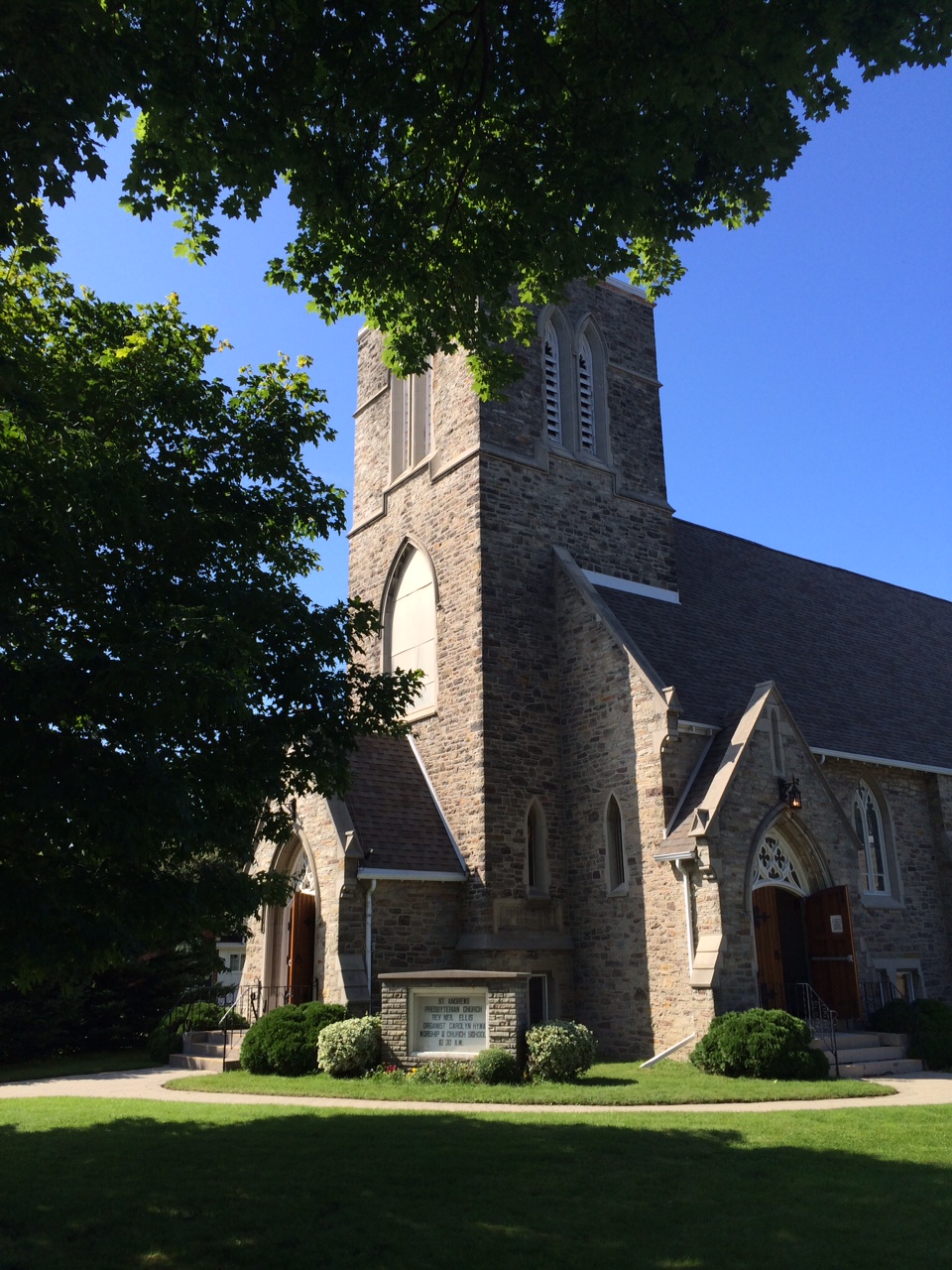
St. Andrew's Presbyterian Church
St. Andrew’s Cobourg is part of the Presbyterian Church in Canada. Our congregation was first established in 1833, and continues to serve the community in Cobourg and beyond.
Donate to St. Andrew's
Thank you for visiting St. Andrew’s. It’s our prayer that this sermon was helpful to your walk of faith. We would ask you to prayerful consider donating to the mission of St. Andrew’s. You can make an online donation through our website.