
Communion Service
Communion Service
Led by: Rev. Magdalena Marais
Scripture: Psalm 51: 1-12, Romans 12: 1-2 and Ephesians 4: 17-24
Read Bulletin
Sermon
Today we celebrate Reformation Sunday. And I must admit, part of my job as a minister is to get excited about church things! But I genuinely believe the Reformation is something worth getting excited about. Because today we are not simply remembering something that happened hundreds of years ago. We are reminded of a question that remains just as important for us today: Are we still willing to be reformed?
Martin Luther became one of the best-known voices of the Reformation because he began to question ways of thinking about faith and the church that had become deeply rooted in his time. The Reformation brought us those familiar Latin phrases that express the heart of our faith:
- Sola Scriptura – Scripture alone.
- Sola Fide – Faith alone.
- Sola Gratia – Grace alone.
- Solus Christus – Christ alone.
- Soli Deo Gloria – To the glory of God alone.
These are beautiful truths. They remind us that our salvation does not depend on our ability to save ourselves, but on what God has done for us through Jesus Christ.
But there is another important expression associated with our Reformed tradition. I could try to impress you with some more Latin, or I could simply give you the English translation: “The church reformed, always being reformed according to the Word of God.” And that is where the challenge begins.
It is one thing to celebrate what the Reformers were prepared to question and change centuries ago. It is quite another to ask whether we are prepared to do the same when God’s Word challenges us today.
We like what is familiar. We become attached to the way things have always been done. We know our traditions, our preferences and our routines. And there is nothing wrong with finding comfort in familiar things.
But what happens when our comfort gets in the way of what God is calling us to do? What happens when we are more concerned about keeping things the way we like them than about allowing God to lead us in a new direction? Being Reformed does not mean changing everything for the sake of change. It means being willing to listen when God’s Word challenges us, to reconsider our assumptions, and to follow where Christ leads us—even when that makes us uncomfortable. And that is why Paul’s words in Romans 12 are so important for us today.
Because of God’s Grace
Paul begins with the word “Therefore.” For eleven chapters, he has been explaining God’s grace, mercy, forgiveness and faithfulness. Now he says, in effect: Because of everything God has done for you, live differently. And the biggest example of grace and obedience is the Communion table today. We do not obey God to earn His acceptance. We respond to the grace we have already received through Jesus Christ.
Do Not Be Conformed, but Be Transformed
Paul describes this response as offering our bodies as a living sacrifice, holy and pleasing to God. In other words, God is not asking for just an hour of our Sunday morning. He wants our whole lives. Our hands, our words, our time, our decisions, our relationships and the way we treat other people. Worship is not simply what happens inside this building. Worship is also how we live when we leave it.
Our faith is a living relationship with Jesus Christ, who saves us by grace and continues to work in us through His Spirit. So, when we’re talking about reforming or changing Paul gives us a guideline that we can use and that was used by those brave people who started the Reformation. Do not be conformed to this world but be transformed by the renewing of your minds.
The world constantly tries to shape us. It tells us to be successful, to have more, to protect what is ours, to win and to seek the approval of others. And gradually, sometimes without even noticing it, we can begin to think and live according to values that look very little like Jesus. Or we get so use to the way we’ve been doing things that tradition and comfort become more important for us. Paul reminds us that we must not allow the world or comfort determine the shape of our lives. Instead, we are called to be transformed. When we gather around the Communion table today we allow ourselves to be changed to be open to grace. We open ourselves to His Word. We allow the Holy Spirit to challenge our attitudes, our priorities and our assumptions. We become willing to change when God shows us that change is necessary. Sometimes God’s Word comforts us. Sometimes it encourages us. And sometimes it makes us uncomfortable because it shows us something we would rather not see.
There is a popular saying that God loves us too much to leave us exactly as we are.
And this is why Reformation Sunday is not only about what happened in the past. The church is always in need of renewal, and so are we. Being Reformed does not mean changing everything simply because it is old. Neither does it mean changing our beliefs to fit every new idea. It means continually returning to Scripture and asking whether our lives and our church are being shaped by Christ.
At the Lord’s Table
In a few moments, we will come together to celebrate Communion. Before we consider what we are called to give to God, we must remember what God has already given to us. Before we offer ourselves to God, Christ has offered Himself for us. At this table, we do not come to earn God’s grace. We come because His grace has already been given to us through Jesus Christ. The bread reminds us of His body given for us. The cup reminds us of His blood shed for us. We do not come to make His sacrifice happen again. We come to remember His saving love and to receive the nourishment He offers us as His people.
And from that place of grace, we are invited to respond. We come to remember. We come to receive. And we come to surrender our lives afresh to Him. Perhaps today we need to place something particular before God. Perhaps there is an attitude that needs to change, a relationship that needs attention, or a part of our lives that we have been unwilling to surrender. Whatever it may be, we come remembering that God’s grace comes first. And when we leave this table, we leave as people called to live differently: people whose lives reflect the grace we have received. And people who is willing to be transformed by grace.
Conclusion
So, on this Reformation Sunday, let us remember that the Reformation is not merely a story about what Martin Luther and the other Reformers changed centuries ago.
It is also an invitation to allow God to continue His work in us today. Perhaps the question we need to take with us is simply this: Lord, what in my life still needs to be transformed by You? As we come to the Lord’s Table, may we remember first that Christ gave Himself for us. And may our response be: “Lord, because of Your grace, I offer myself to You. Renew my mind. Transform my heart. Shape my life according to Your Word.” May we never become so comfortable that we stop allowing God to change us. May we keep returning to His Word, keep returning to His grace, and keep returning to Christ. For the church is reformed and always being reformed according to the Word of God and our calling as His Church. Amen.
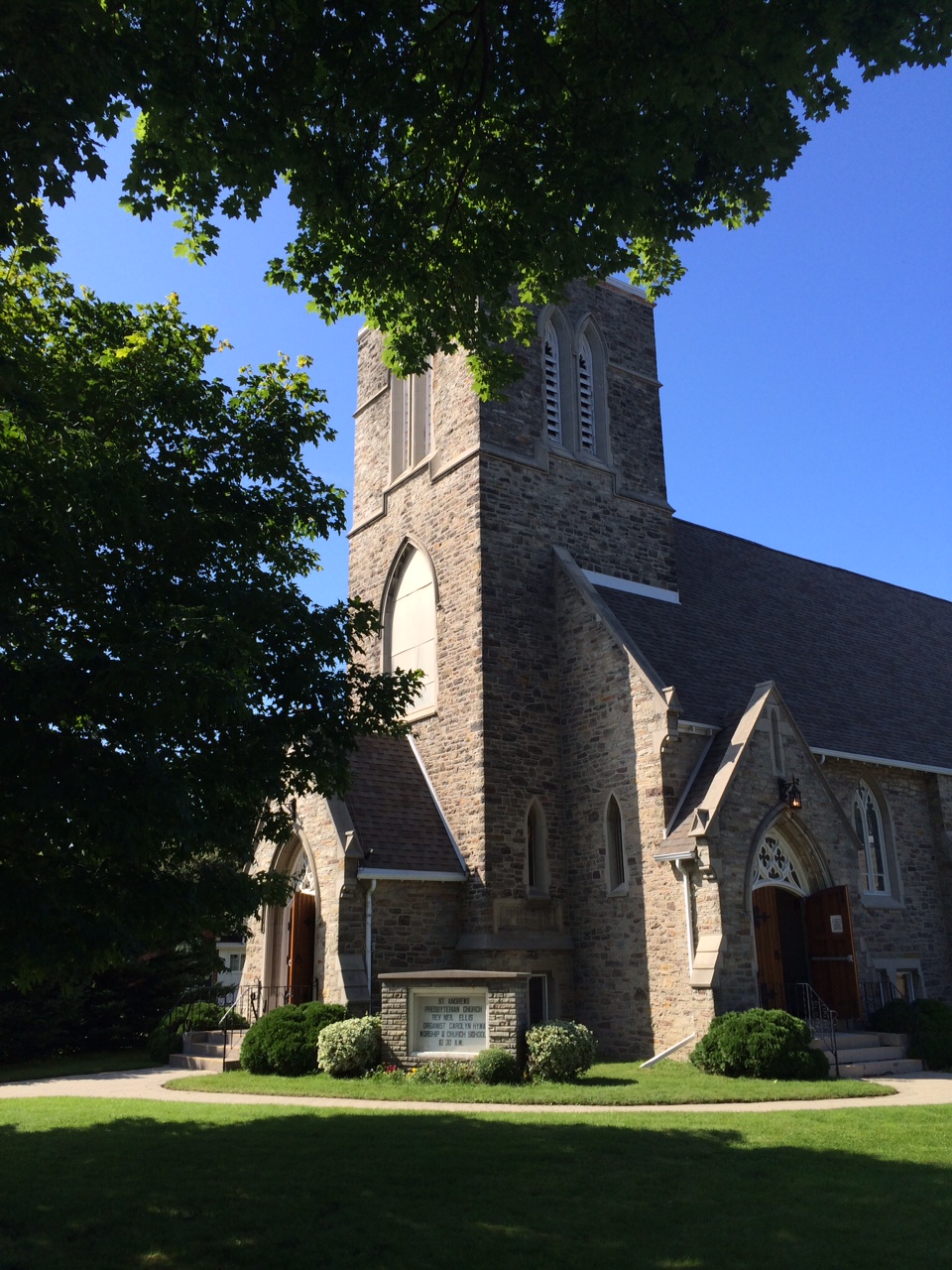
St. Andrew's Presbyterian Church
St. Andrew’s Cobourg is part of the Presbyterian Church in Canada. Our congregation was first established in 1833, and continues to serve the community in Cobourg and beyond.
Donate to St. Andrew's
Thank you for visiting St. Andrew’s. It’s our prayer that this sermon was helpful to your walk of faith. We would ask you to prayerful consider donating to the mission of St. Andrew’s. You can make an online donation through our website.