
Harvest Sunday
Harvest Sunday
Led by: Rev. Magdalena Marais
Scripture: Psalm 95: 1 – 7, Luke 17: 11 – 19 and Deuteronomy 8: 11 – 18
Read Bulletin
Sermon
There is something about Thanksgiving that we all understand. We know how to say: “Thank you.” Someone gives us a gift — we say thank you. Someone helps us — we say thank you. And yet Jesus tells a story today where something very simple becomes a much deeper question. Ten men are healed and receive an extraordinary gift. But only one comes back. And we hear Jesus’ question: “There were ten who were healed; where are the other nine?” That is a difficult question. Because Jesus does not ask it because He needs to hear the words “thank you.”
He asks it because something important has happened inside the one who returned.
Something that the other nine seem to have missed. They all received the blessing but only one received it and recognise where it came from. For us this will be our first Thanksgiving but for most of you it is old news. You are used to making the “We are thankful for” list. So today we will skip the list of what we have received and focus on where it came from.
Ten Men Had a Reason to Be Grateful
Luke tells us that Jesus is travelling along the border between Samaria and Galilee.
And ten men with leprosy meet Him. They stand at a distance because they are not allowed to live like everyone else. They are forced to be excluded and separated. Their illness has affected far more than their bodies. It has affected their families, their friendships, their worship, their work, and their place in society. Therefore, the desperate cry from a distance: “Have pity on us!” Jesus tells them to go and show themselves to the priests. And on their way there they are healed. Can you imagine that moment? For the first time in perhaps years, they can imagine going home, seeing their families, returning to work and ordinary life. There is no question that all ten had reason to be grateful for the incredible gift they received. All ten experienced the mercy of Jesus and had their lives changed. And yet only one turns back.
Luke tells us that one the way there they were healed and one saw he was clean and he came back. I really do love those words: “He came back”. While walking away from Jesus towards a normal and much better live he is willing to turn around and come back. He falls at Jesus’ feet and praise God! That is the real picture of gratitude and being thankful. Gratitude is not simply being pleased because something good happened it is about recognising the goodness and asking: “Where did this blessing come from?” The man did not simply celebrate his healing. He was willing to turn around and go back to the One who gave him the blessing. That is what makes this story so powerful. It’s not just an automatic “Thank you” and carrying on – he comes back and praise God for the gift. He did not allow the gift to become more important than the Giver.
“Where Are the Other Nine?”
Now we also get the sticky part of the story – the other nine. And we do tent to go in full judging mode when thinking about their actions or lack of action. But we can also put ourselves in their shoes and try to explain why they did not turn back. We need to be careful because the text does not tell us why the other nine did not return. Perhaps they were overwhelmed, eager to get home to their families or just following Jesus instructions. We don’t know. So, Jesus is not necessarily making a judgment about their motives. Instead, His question makes us stop and think. Because we can all recognise something of ourselves in the nine. Our prayers often reflect the same desperate call from a distance we see in our story. And then, when the crisis passes, life becomes busy again and we move on. The prayer was answered, the problem solved, the blessing arrived and we forget to come back.
Our Old Testament scripture helps us build on this a bit. Moses is speaking to Israel before they enter the Promised Land. They are about to begin a new life of abundance. And Moses says, in effect: Be careful. You’re receiving so much through the grace of God do not forget the One who gave it to you. Moses warns them that they may forget God when life is good. And that can be our downfall as well. As soon as life is running smooth and we feel blessed we forget to turn back.
We can quietly begin to live as though we have done it all ourselves. Moses says:
Remember the Lord who brought you here, carried you and blessed you.
Thanksgiving Is About Remembering
Moses gives us one word to define Thanksgiving with: Remember! Not because God has forgotten us but because we forget. We forget how much we have received. We forget the people who helped us along the way. We forget the prayers that were answered. We forget the strength we were given when we didn’t think we could continue. We forget that what feels ordinary today was once something we prayed for. Sometimes we are so busy asking God for the next thing that we never stop to thank and praise Him for the last thing. Maybe that is way the Bible speaks so often about remembering. Remember the Lord, His faithfulness, mercy and what He has done. Because remembering changes the way we look at the present.
The Samaritan Came Back
The man who comes back is a Samaritan. Once again Jesus use the person the listeners might not have expected to be the example. The outcast is the one who comes back, recognises mercy, the one who falls at Jesus’ feet with praise. And then Jesus says something beautiful: “Get up and go on your way; your faith has made you well.” His healing was already visible but perhaps now something deeper has happened. He didn’t just receive a changed body but also a new spirit.
He has recognised the One who gave him new life. He has understood that this moment is not simply about what happened to him, but about who Jesus is. And that’s why he came back. So perhaps on this Thanksgiving Sunday, it is worth asking ourselves a few simple questions. What have I forgotten? Did I remember to come back.
Thanksgiving Is a Return
I think that is what I love most about this story. Thanksgiving is not just a word it is a movement, an action. The man is going one way. He stops, makes a U turn and comes back. That is such a beautiful picture of Christian gratitude and thankfulness. It means stopping in the middle of our busy lives putting down what we are doing and remembering. Looking back over the past year and saying: “God, You were there, you carried me, provided for me and never left me”. Praising God as the Giver of all we have.
On Thanksgiving, we rightly celebrate the blessings of life. We gather around tables.
We share meals. We enjoy our families and friends. We give thanks for the good things in our lives. And we should. But Scripture also reminds us that gratitude should open our eyes. Because there are people whose tables are not full. There are families facing hunger. There are people living with loneliness, illness, poverty, displacement, and fear. And so perhaps true Thanksgiving says: “Lord, thank You for what I have — and show me how I can use what I have to bless someone else.”
Conclusion
Ten men were healed, received mercy and had reason to rejoice. But one stopped, turned around and came back. And perhaps Jesus’ question still reaches us today:
“Where are the other nine?” Not as a condemnation but as an invitation. Don’t forget to come back. Come back when life is going well. Because the greatest gift is not simply what we have received. The greatest gift is knowing the One who gives it.
So today, let us be people who remember. Let us remember that our lives are held by grace. Let us remember that every good gift comes from God. Let us remember those who have walked beside us. And above all, let us remember Christ. And when we remember, may we do what that one man did. May we turn around. May we come back. May we fall at the feet of Jesus and praise the Giver. And then may we get up and go into the world with grateful hearts, open hands, and lives that reflect the grace we have received. Amen.
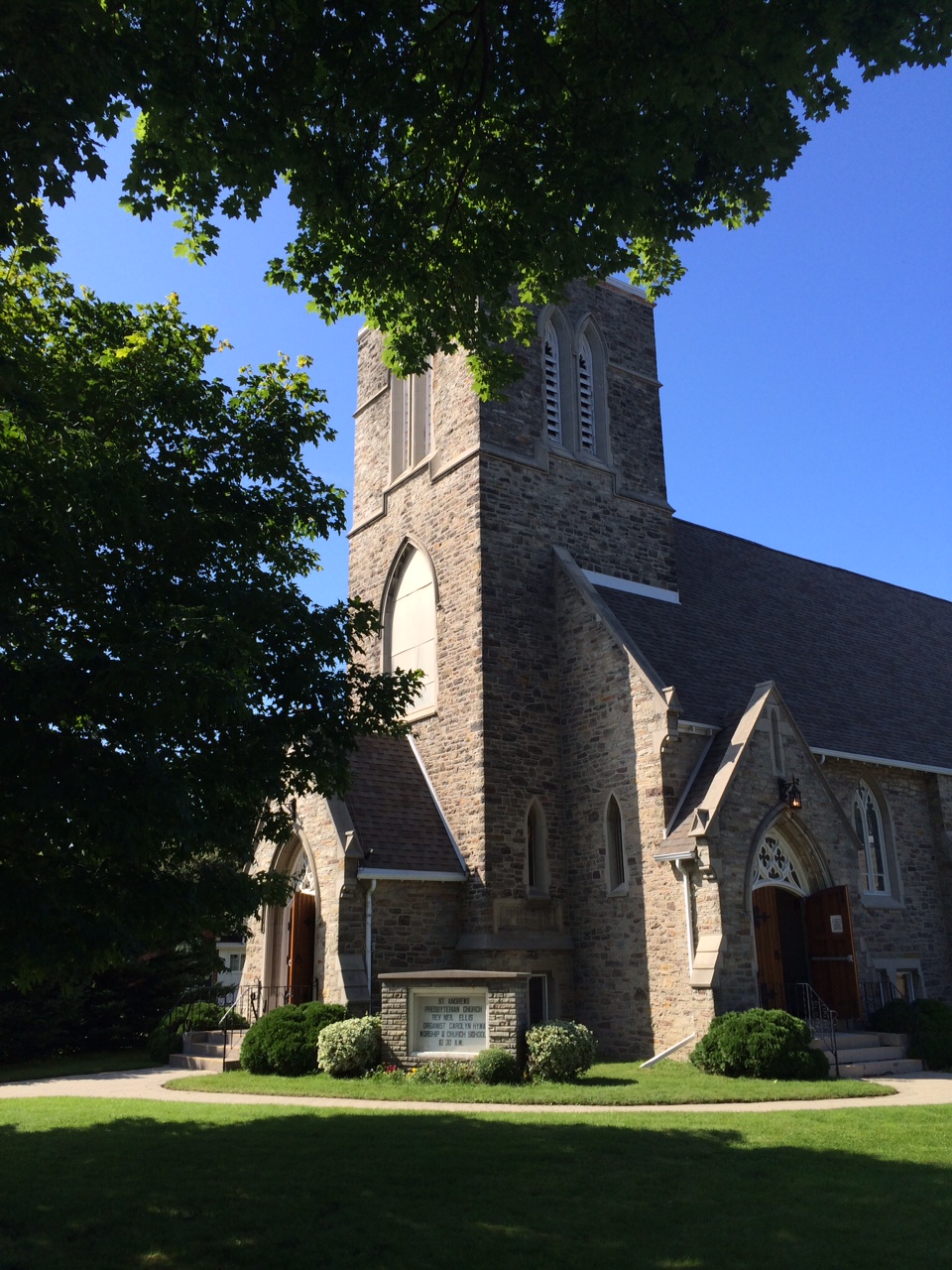
St. Andrew's Presbyterian Church
St. Andrew’s Cobourg is part of the Presbyterian Church in Canada. Our congregation was first established in 1833, and continues to serve the community in Cobourg and beyond.
Donate to St. Andrew's
Thank you for visiting St. Andrew’s. It’s our prayer that this sermon was helpful to your walk of faith. We would ask you to prayerful consider donating to the mission of St. Andrew’s. You can make an online donation through our website.