
Dare to Say Yes
Dare to Say Yes
Led by: Rev. Magdalena Marais
Scripture: Psalm 138, Luke 19: 1 – 10 and Jeremiah 1: 4 – 10
Read Bulletin
Unfortunately, due to an unforeseen technical issue, this week’s worship service was not livestreamed. We apologize for the inconvenience. Please find the sermon text below.
Sermon
God Knows Us by Name
One of the surprising things we discover in the stories of people called by God is that they often do not expect to be called at all. They are going about their ordinary lives when, suddenly, they discover that God knows them, sees them, and wants to use them. And what a difference that discovery can make! There is something deeply human about wanting to be known. We want somebody to notice us, to remember our name, and to care enough to take an interest in our lives. Some of us may remember the old television show Cheers, with its familiar theme song about wanting to go somewhere where everybody knows your name. Perhaps that feeling is part of what made the show so appealing. We all want to know that we matter to someone.
And how much more wonderful it is to discover that we matter to God!
Yet many people struggle to believe that God could truly know them, call them, or have a purpose for their lives. We look at ourselves, at our mistakes and limitations, and wonder whether God could really use someone like us. The Bible is full of people who discovered, often to their own surprise, that God knew exactly who they were. Think of Moses. He was living far from Egypt, looking after his father-in-law’s sheep, when he encountered God at the burning bush. Then he heard something extraordinary: God called him by name. Moses had not been looking for a great calling or planning to become a leader. And when God told him what he was to do, Moses immediately began looking for reasons why he was not the right person.
We see something similar in Jeremiah. God tells him that He knew him before he was formed in the womb and had set him apart for a purpose. Jeremiah’s response is not one of confidence. He feels too young and inexperienced. But God does not dismiss him. Instead, God promises to guide him and give him the words he needs.
Both men had to discover that God’s call was not dependent on their own confidence.
And then we come to Zacchaeus. Zacchaeus climbed a tree because he wanted to see Jesus. Perhaps at first it was nothing more than curiosity. He had heard about Jesus and wanted to see what all the fuss was about. He probably did not expect anything more than a glimpse of the man everyone was talking about. But Jesus stopped beneath that tree and called to him. Jesus knew his name. Imagine what that moment must have meant to him. Here was someone who knew who he was, someone who was willing to speak to him and even enter his home. The crowd had already decided what sort of person he was. He was a tax collector, a man who had become wealthy through a profession associated with dishonesty and exploitation. The people knew his reputation, and they did not approve of Jesus choosing to visit him.
But Jesus saw more than a reputation. He saw a person whose life could still change. And something remarkable happened. Zacchaeus welcomed Jesus gladly. His encounter with Christ changed the way he looked at his possessions and the people he had harmed. He committed himself to giving to the poor and making restitution where he had cheated others. Jesus had entered his home, but the encounter reached much further than his front door. It began to change his whole life.
God Calls Us Despite Ourselves
This is what happens when we discover that God knows us and calls us. We realise that our lives are not simply about getting through the day, looking after ourselves, and trying to find our own happiness. We begin to understand that we are invited into something greater: a life lived in relationship with God and in service to others.
Sometimes we miss that invitation because we become so determined to manage everything ourselves. We believe that we know what we need, what will make us happy, and how best to achieve our goals. We pursue the things the world promises will satisfy us. And yet, even when we achieve what we wanted, we may discover that the satisfaction does not last.
Perhaps the longing we carry is deeper than we realise. Perhaps we are not simply searching for something more, but for someone who truly knows us, understands us, and gives our lives meaning. The good news of the Gospel is that God has not forgotten us. Again and again, Scripture reminds us that God knows His people and calls them by name. In Isaiah 43, God tells His people that they belong to Him and that He has called them by name. We are not anonymous to God. We are not simply faces in a crowd. Each of us is known and loved by the One who created us. But that brings us to another difficulty. Even when we believe that God knows us, we may still feel that He could never use us.
We know our own failures too well. We know the things we regret and the ways in which we have disappointed others. But Zacchaeus reminds us that God’s grace is greater than our failures. Jesus did not pretend that Zacchaeus’s actions had caused no harm. Instead, His presence opened the way for repentance, restoration, and a different life. God knows the truth about us, even the parts of ourselves we would rather hide. Yet He continues to invite us into His work. This is not because our mistakes do not matter, but because God’s love and desire to bring new life are greater than our failures.
We may believe that we need to become more confident, more talented, more knowledgeable, or more capable before God can use us. We imagine that serving God requires us to meet a long list of qualifications. But look at the people God called in Scripture. Moses questioned his ability. Jeremiah felt too young. Peter knew his own failures. None of them began with perfect confidence. God created each of us differently. We have different gifts, experiences, personalities, and opportunities. Not everyone is called to do the same thing, and not every act of service will be visible to others. But each of us has a place in God’s kingdom.
Sometimes God uses our strengths. Sometimes our limitations teach us to depend more deeply on Him. And often, God uses the ordinary things we already have: a willingness to listen, the ability to encourage someone, the courage to speak when something is wrong, or the generosity to share what we have.
Dare to Say Yes
The question is not whether we are as capable as somebody else. The question is whether we are willing to respond when God calls. There is a beautiful thought often expressed in Christian writing: each person has a particular message to share, a song to sing, and an act of love to offer. No one else can offer exactly what we have been given to share with the world. It means that our lives have a purpose, and that the opportunities God places before us matter.
So perhaps today we need to ask ourselves a simple question: What is God inviting me to say yes to? It might be a willingness to help someone who is struggling. It might mean welcoming a person who feels excluded. It might mean admitting that we have been wrong and taking steps to make things right. Perhaps it means offering a gift or an ability that we have kept to ourselves because we did not think it was important enough. Zacchaeus did not climb that tree expecting his life to change. This story remind us that an encounter with God can open a door we never imagined walking through. God knows your name. God knows your story, your gifts, your regrets, and your hopes. And God sees possibilities in you that you may not yet see in yourself.
So when God opens a door, when someone needs your help, when an opportunity to serve appears, or when you sense that you are being called to do something that matters, dare to say yes. Because the God who calls you also knows you, loves you, and promises to walk with you. God knows your name. God calls you. The question is: will you dare to say yes? Amen.
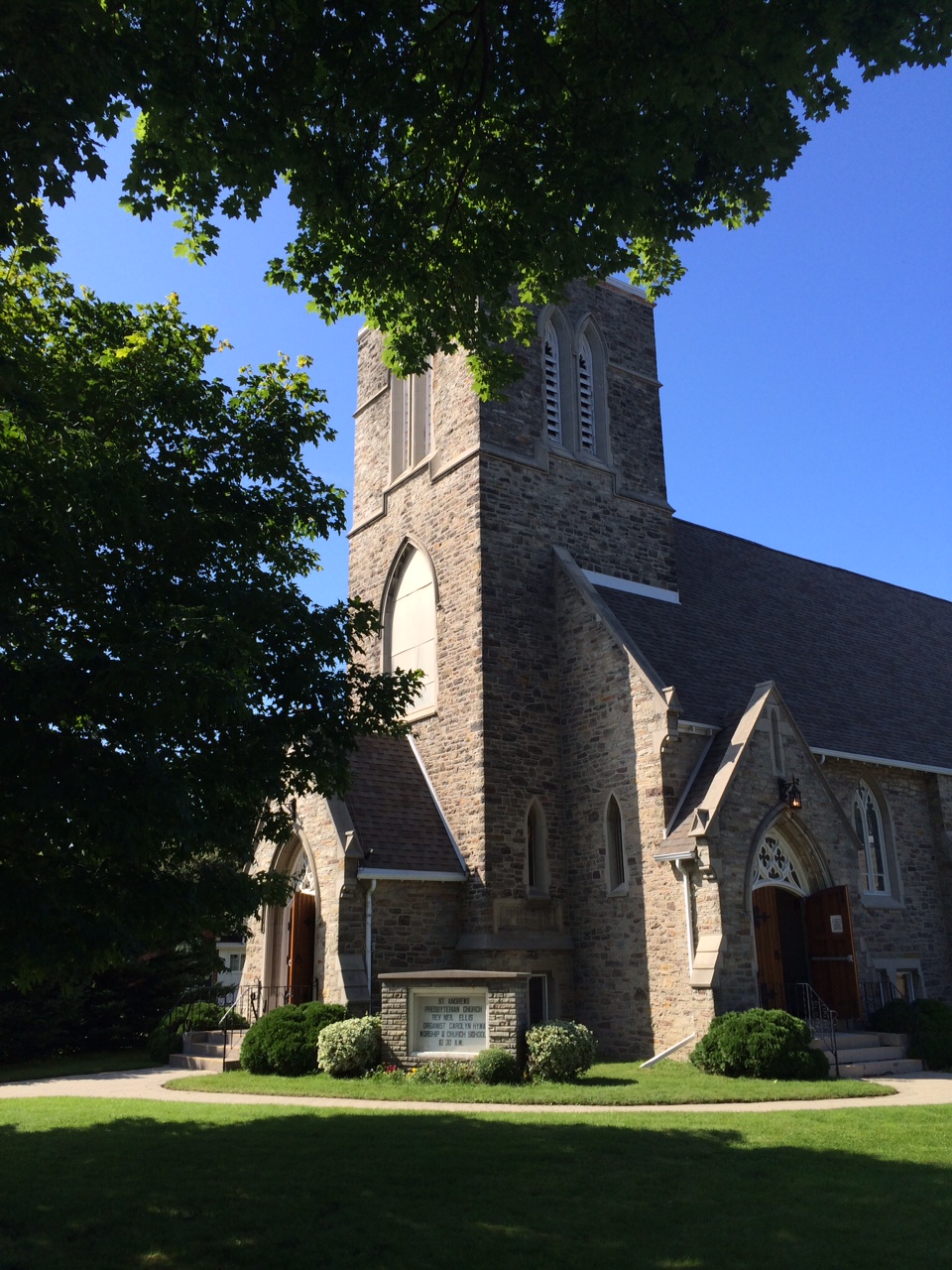
St. Andrew's Presbyterian Church
St. Andrew’s Cobourg is part of the Presbyterian Church in Canada. Our congregation was first established in 1833, and continues to serve the community in Cobourg and beyond.
Donate to St. Andrew's
Thank you for visiting St. Andrew’s. It’s our prayer that this sermon was helpful to your walk of faith. We would ask you to prayerful consider donating to the mission of St. Andrew’s. You can make an online donation through our website.