Love Your Neighbour

Aug 23, 2026

Love Your Neighbour

Led by: Rev. Magdalena Marais

Scripture: Psalm 112, Luke 10: 25 – 37 and Leviticus 19: 9 – 18
Becoming the Neighbour

Years ago, the American broadcaster and writer Charles Osgood wrote a short poem that has become famous around the world. 

It tells the story of four people named Everybody, Somebody, Anybody and Nobody. 

There was an important job to be done. 

Everybody thought Somebody would do it.

Anybody could have done it.

But Nobody did it.

Somebody became angry because it was Everybody’s responsibility.

In the end, Everybody blamed Somebody because Nobody did what Anybody could have done.

Although it was written many years ago, I sometimes wonder if Charles Osgood wasn’t describing the world we still live in today.  We see someone struggling and assume somebody else will help.  We hear about a lonely neighbour and think somebody else will make the phone call.  We notice someone grieving and hope somebody else will visit.  We see suffering on the news and wonder why nobody is doing anything.  Jesus tells a story that quietly removes the words “somebody else” from our vocabulary.

The Wrong Question

The story begins with an expert in the Law asking Jesus, Teacher, what must I do to receive eternal life?”  Jesus answers with another question.  “What do the Scriptures say?”  The lawyer gives the right answer.  “Love the Lord your God with all your heart, soul, strength and mind. And love your neighbour as yourself.”  Jesus simply replies, “You are right. Do this and you will live.”  The conversation could have ended there.  But Luke tells us something very important.

“The teacher of the Law wanted to justify himself.”  So, he asks one more question.  “And who is my neighbour?”  At first it sounds like an innocent question.  But underneath it lies another question.  “Where does my responsibility end?”  Who deserves my love?  Who doesn’t?  Who is close enough to count?  Who can I quietly ignore?  If we are honest, we sometimes ask the same question.  Not out loud perhaps.  But in our hearts.  How much should I give?  How much time should I invest?  Surely, I cannot help everyone.

Jesus never directly answers the lawyer’s question.  Instead, He tells a story.  Because Jesus is far more interested in changing our hearts than simply answering our questions.

When Religion Forgets Compassion

Jesus describes a man travelling the dangerous road from Jerusalem to Jericho.

He is attacked, robbed, beaten, stropped and left beside the road.  Then comes the first surprise.  A priest walks by, surely, he will stop – but he doesn’t.  He crosses to the other side.  Then comes a Levite.  Surely this religious leader will help – he doesn’t either.  He also walks away.  We don’t know why they didn’t stop.  Perhaps they feared becoming ceremonially unclean, afraid the robbers were still nearby, simply felt they were too busy or that somebody else might stop.  Whatever the reason, Jesus makes one thing painfully clear.  It is entirely possible to be deeply religious and yet completely miss the person lying beside the road.  That should make every one of us stop and think.  We can attend church, read our Bibles and pray faithfully.  And still become so occupied with doing religious things that we fail to notice the people God places in front of us.  Compassion is never measured by how much we know.  It is measured by how deeply we love.

Mercy Crosses Every Boundary

Then Jesus introduces the most unexpected person in the story.  “But a Samaritan…”  Those words would have shocked His listeners.  To us, a Samaritan simply sounds like another traveller.  But to the Jewish people listening that day, Samaritans were outsiders.  For centuries Jews and Samaritans had distrusted one another.  They worshipped in different places and avoided one another whenever possible.  Many Jews considered Samaritans enemies rather than neighbours.

Yet Jesus deliberately makes the Samaritan the hero of the story. 

Because mercy refuses to recognise the boundaries that hatred creates.  Mercy crosses every barrier that bias builds.  The Samaritan doesn’t stop to ask, “Is this man like me, does he deserve my help or will he ever repay me?”  He simply sees someone in need.  And then we see mercy begins to move.  We see the picture unfolding.  The Samaritan kneels beside the wounded man, clean his wounds with oil and water, carefully bandages them and lifts the man onto his own animal.

He takes him to an inn and pays for his care with a promise to return.  Notice how practical compassion is.  The Samaritan doesn’t simply feel sorry, he does something.  Love is never only an emotion.  Love always becomes action.  Sometimes loving our neighbour costs us.  It interrupts our plans, changes our schedule, requires our time and sometimes even our money.  Real love is rarely convenient, but it always reflects the heart of God.

Christ, Our True Neighbour

Then Jesus asks one final question.  “Which one of these three was a neighbour to the man who fell into the hands of the robbers?”  The lawyer asked, “Who is my neighbour?”  Jesus changes the question completely.  He asks, “Will you become a neighbour?”  That changes the questions in our hearts as well.  The issue is no longer deciding who deserves our love.  The issue is becoming the kind of person who loves.  Although it’s a common question when reading the passage, it still needs to be asked.  Before we rush to place ourselves in the Samaritan’s shoes – where we want to be, perhaps we should ask another question:” Who were we really in this story?”  The truth is before we ever became neighbours to anyone else

we were the man lying beside the road.  Broken, wounded by sin and unable to rescue ourselves.  We were spiritually helpless.  And while the world passed us by Jesus stopped.  He came to us, touched our wounds, lifted our burdens and paid the debt we could never pay.  He brought us safely into His Father’s care – that is the Gospel.  Everything we believe and rooted ourselves in comes back to the fact that we love because Christ first loved us.  We show mercy because we have received mercy.  We become neighbours because Jesus first became our neighbour.

Go and Do Likewise

Jesus ends with one simple sentence.  “Go and do the same.”  He is not expecting us to save the whole world but keeping our little poem in mind we can’t always wait for somebody else to step up.  Jesus asks us to become neighbours wherever He places us.  With all the hurt, brokenness and despair in the world around us we can feel overwhelmed and just do nothing. But somewhere this week someone will cross your path.  You may know their whole story and realize how deeply they are hurting and need help.  Maybe someone will cross your path that you know nothing about, but you can see that they need help.  Help comes in many forms.  Perhaps they need someone to listen, to encourage or just simply notice them.  The band aid isn’t the important part, the willingness to stop and take notice is. 

If we’re willing to open ourselves to the people that cross our paths, we open ourselves for the possible for an ordinary moment to become a holy moment?

Not because we planned it but because Christ placed us there.  Charles Osgood’s little poem reminds us of what happens when Everybody waits for Somebody.  Jesus offers a different way forward.  Don’t wait for somebody else, become the neighbour.

Not to become the hero of the story but because the true Hero first showed mercy to us.  May people discover the kindness of Christ through the kindness they receive from us.  And may our lives reflect the mercy we ourselves have received.  Amen.

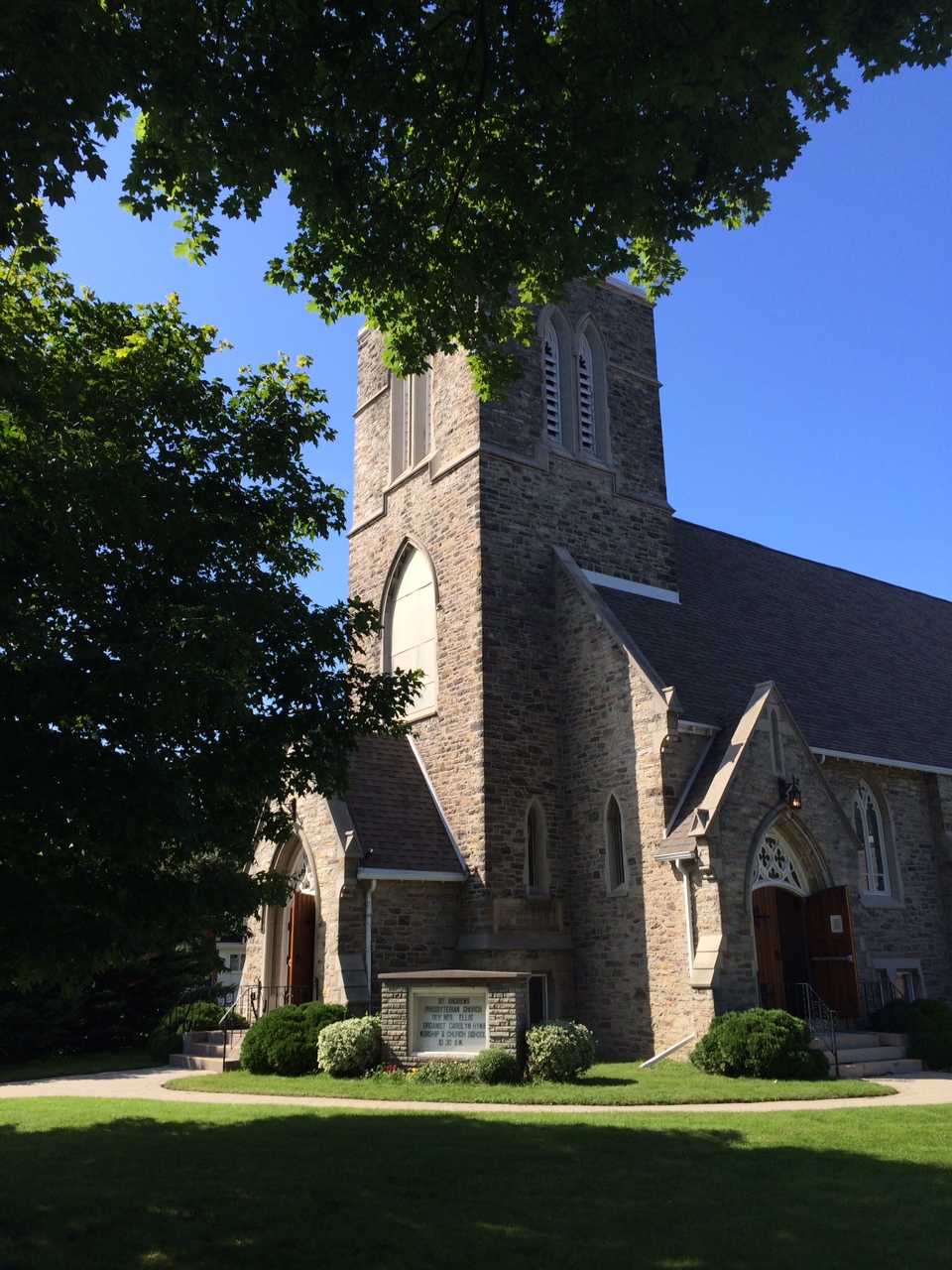
St. Andrew's Presbyterian Church

St. Andrew's Presbyterian Church

St. Andrew’s Cobourg is part of the Presbyterian Church in Canada. Our congregation was first established in 1833, and continues to serve the community in Cobourg and beyond.

Donate to St. Andrew's

Thank you for visiting St. Andrew’s. It’s our prayer that this sermon was helpful to your walk of faith. We would ask you to prayerful consider donating to the mission of St. Andrew’s. You can make an online donation through our website.