
Truth and Reconciliation Sunday
Truth and Reconciliation Sunday
Led by: Rev. Magdalena Marais
Scripture: Psalm 101, Matthew 25: 14-30 and Ruth 2: 1 – 12
Read Bulletin
Sermon
The last two Sunday’s we heard a bit about what we have to share with the world around us. Paul reminded us that we have a treasure inside of us no matter who we are. We know that the power and glory belong to God. And yet God chooses to work through ordinary people like us. And Karen reminded us that we all have something to share with the world. So, the next natural question that follows from that: If God has placed something in our hands, entrusted us with a treasure inside us, what are we going to do with it?
That is where Jesus’ parable takes us today. Jesus tells the story of a man who is going away on a journey. Before he leaves, he calls his servants and entrusts his property to them. We hear that one servant gets five talents, another two and the third one. And then he leaves. The servants are not given the same amount.
They are not given the same abilities, the same opportunities, or the same responsibilities. Each one receives something different. The master does not say:
“Make sure you all produce the same result.” He simply entrusts something to each of them. And eventually, he returns and asks what they have done with what was placed in their hands. That is the question sitting at the heart of this parable and with everything we heard the last few Sundays. What has God placed in my hands, and what am I doing with it?
Everything Begins with What Has Been Entrusted to Us
There is a very important detail in this story – the servants did not create the talents and did not belong to them. They were entrusted to them. In the ancient world, a talent was a very large amount of money. Jesus is deliberately making the point that this master has placed something of considerable value into the hands of his servants. The treasure Paul spoke about. But before we talk about responsibility, we need to talk about grace. Everything we have begins with something we have received. Our abilities, opportunities, resources, health, relationships, time – all of it is grace. Even the things we have worked hard for have not come into our hands by our own strength alone.
The question to ask is not “What can I achieve?” but “What has God entrusted to me?” That changes our attitude because stewardship begins with gratitude. We are not the owners of everything we have, we are entrusted with it.
We Are Not Given the Same Things
The next thing we see is that all three receive something different. And immediately, that touches something very real in us. Because we are constantly comparing. Also, our spiritual live and our church. And sometimes comparison makes us forget what has actually been placed in our own hands. The master has entrusted different amounts to different people. And the point is not equality of assignment it is faithfulness. We do not have to live someone else’s life or carry someone else’s responsibility to produce what God has entrusted to somebody else. We are responsible for what God has placed in our hands. It does not matter if I receive 5 talents or one.
The First Two Servants Do Something with What They Have Received
Jesus tells us that the first servant goes at once and puts his five talents to work.
The second does the same with his two. Immediately there is action, responsibility and a willingness to take what has been entrusted to them and do something with it.
They do not simply admire the gift. They do not spend their time wishing they had more. They put what they have been given to work. And that’s a very important lesson for us. Sometimes we become so focused on what we have and don’t have we forget to use them. A gift sitting untouched does not help very much. Or an ability never developed cannot benefit many people. Opportunities missed and resources kept for ourselves provide no glory to God at all. We all received something and that something needs to lead to action.
Faithfulness Does Not Mean Doing Something Spectacular
This is where the title of this sermon becomes important: Faithful in the Small Things. Because most of our lives are made up of small things. As a church we often get lost in doing big stuff that draw’s a lot of attention. Having ministries that’s impressive. And therefore, we wait for that big thing. We think perhaps one day there will be a great opportunity, a major ministry, a dramatic moment when we finally make a difference.
But most of the time, God gives us something much more ordinary and when we use the ordinary, we have God makes it something big. He gives us people to care for, responsibilities to carry, work to do, resources to manage, children to raise, families to support, communities to serve and churches to strengthen. And it all starts with being faithful in the small things – not waiting for the big thing to happen.
The Third Servant Shows Us the Danger of Fear
Then we come to the third servant. And I do feel sorry for him. Out of fear the only action he takes is keeping it safe. And I can 100% relate to his actions. Fear is what stopped him and this is where the parable becomes uncomfortable. We can understand fear. Sometimes fear makes the safest option feel like the wisest option. We don’t want to be wrong or do something wrong. So out of fear we do nothing. We hide our talent. And then we can tell ourselves: “At least I didn’t make a mistake.” But through this story Jesus challenges that idea.
We Can Bury Things in Many Different Ways
We may not literally bury something in the ground. But there are many ways to bury what God has entrusted to us. You can make your own list on how you sometimes bury your talents. The most common one for me seems to be: “Someone else could do it better.” And perhaps they could. But the question is not “Can I do it better than someone else” the question should always be what am I doing with my talents?
Faithfulness Is Not Comparison
We also see that the servants did not produce the same talents. The first one made five and the second one two. And both are describe as being faithful. And perhaps that is one of the most important things Jesus wants us to understand. God’s measure is not always the measure we use. It’s not always about bigger and better it’s about using the talents, the treasure inside you.
What Does Faithfulness Look Like in Real Life?
Faithfulness does not always look the same. For one person, faithfulness may mean managing their finances responsibly and generously. For another, it may mean using their professional skills to help someone who could never afford them.
For another, it may mean investing time in children or young people. For another, it may mean taking responsibility for something in the church that nobody else wants to do. The list is endless because we all have different gifts and the size of the task is not the measure of the faithfulness.
What Has God Placed in Your Hands?
So perhaps the question for us today is very practical.
Take a moment and think: What has God placed in my hands?
Whatever it is, Jesus asks: What are you doing with it?
We do not need more than we have to start making a difference. To show God’s love and grace to the world. It doesn’t matter if you have five, two or one talent. We need to stop waiting for the perfect circumstances before we become faithful. We can start where we are. We can use what we have. Not because we know exactly how everything will turn out. But because God has entrusted something to us.
Conclusion
Faithfulness is not about having the most, it is about making good use of what has been placed in our hands. To trust that our talent can make a difference and push past our fear of being ordinary. And perhaps one day, when the Master comes to us, our prayer will not be: “Lord, look how much I accomplished.” It may simply be: “Lord, You gave me something, and I tried to use it faithfully.”
We’re starting a new chapter in St Andrew’s and God calls all of us to be a part of the story. A story that proclaims the glory of God. And may we one day hear: “Well done, good and faithful servant.” Amen.
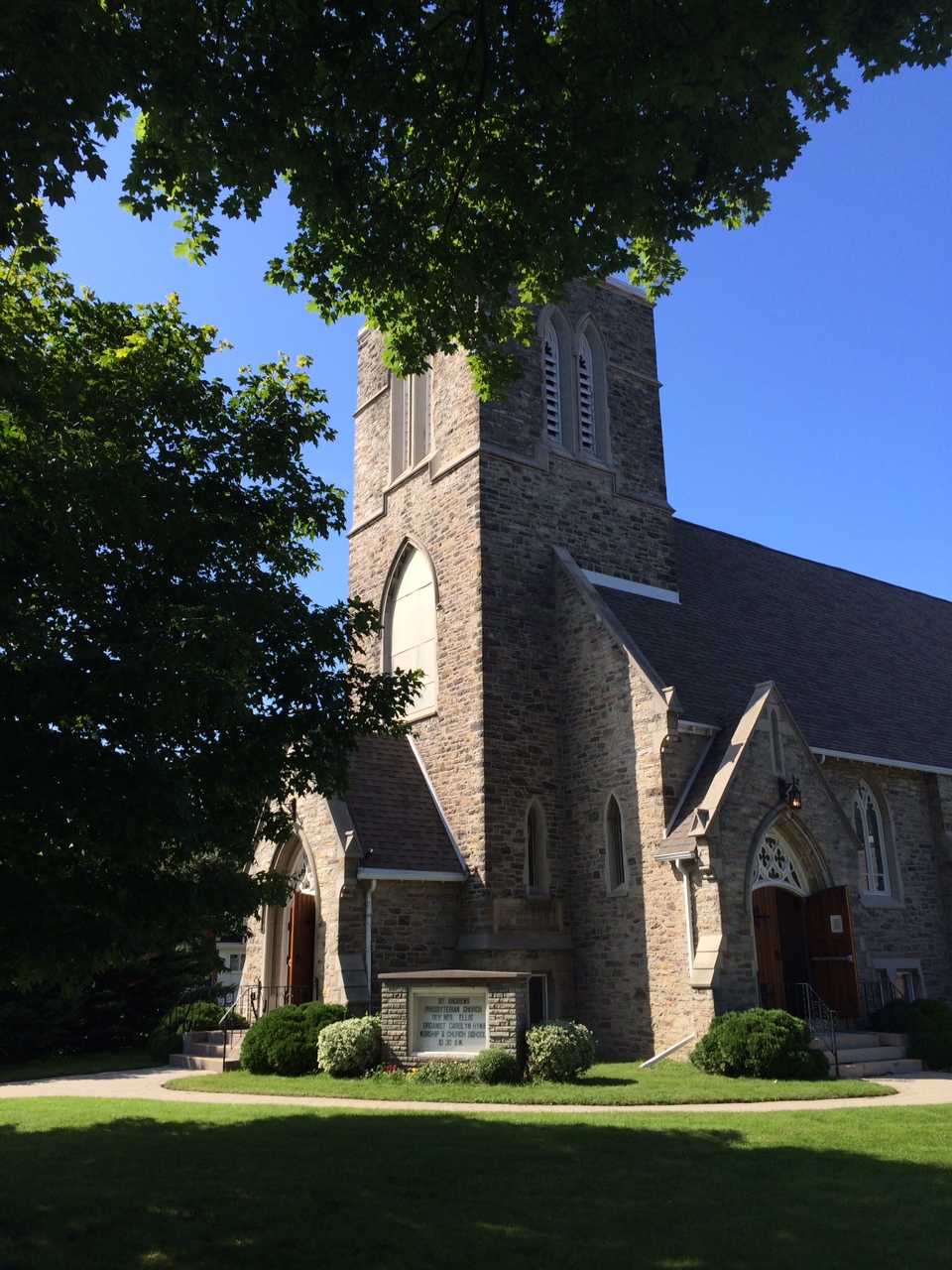
St. Andrew's Presbyterian Church
St. Andrew’s Cobourg is part of the Presbyterian Church in Canada. Our congregation was first established in 1833, and continues to serve the community in Cobourg and beyond.
Donate to St. Andrew's
Thank you for visiting St. Andrew’s. It’s our prayer that this sermon was helpful to your walk of faith. We would ask you to prayerful consider donating to the mission of St. Andrew’s. You can make an online donation through our website.