
The Shape of a Christian Life
The Shape of a Christian Life
Led by: Rev. Magdalena Marais
Scripture: Psalm 113, Philippians 2: 1 – 11 and Micah 6: 6 – 8
Read Bulletin
Sermon
Do you remember the beginning of the whole “What Would Jesus Do?” movement? For a while, it seemed to be everywhere. People wore bracelets with the letters WWJD. The phrase appeared on necklaces, T-shirts, books, keyrings — almost anything you could print it on. And the question was simple: “What would Jesus do?” It is a powerful question. When I don’t know what to say, what would Jesus do? When someone has hurt me, what would Jesus do? When I have a difficult decision to make, what would Jesus do? When I am angry, disappointed, or tempted to put myself first, what would Jesus do? But like many things that become familiar, the excitement eventually faded. The bracelets disappeared. The letters became less visible. And perhaps, for some of us, the question itself became less visible too.
But the question remains a good one. In fact, it is very close to what Paul asks in our scripture. Paul says: “The attitude you should have is the one that Christ Jesus had.” And suddenly this becomes much more challenging than a bracelet with 4 letters on. Because Paul is not simply saying: Ask yourself – What Would Jesus Do? He is saying: “The attitude you should have is the one that Christ Jesus had.” And we might hear that and think: Really, Paul? Are you serious? The same attitude that was in Jesus Christ? The word attitude means that we need to have the same way of thinking, same way of looking at other people, same willingness to serve, same humility. That sounds almost impossible. And our first reaction is: “Surely Paul could have made this a little easier.” If I ask my son to do something I would always end with: “Promise me you will do it” and will always reply “I promise I will try”. And we want to give the same response to Paul. “We will try but…” and leave us some room to justify ourselves it we do not have the same attitude as Christ. And when we look honestly at ourselves, we realise how different our natural instincts can be from the way of Jesus.
The Way of Jesus Is Often the Opposite of Our Natural Way
Paul describes Jesus by showing us a movement from heaven to earth. Jesus was in the form of God and yet He did not cling to His status. He emptied Himself, took the form of a servant and humbled Himself. He became obedient in such a way that He was willing to give His life. Everything about that movement is downward. Our lives are always about moving up. Starter house, car, job etc and moving up through our lives to better. We get a very different picture here. Jesus moves from greatness to humility. And we want to move from humility to greatness. Jesus gives; we want to keep. Jesus serves; we love to be served. Jesus puts Himself in the hands of others; we often want to remain in control. Jesus does not cling to His position; we can spend enormous amounts of energy protecting ours. Our human nature is to care about recognition, status, approval and being respected.
We even have that expression: “It is not who you are. It is who you know.” The people we are connected to matter. The people we are seen with matter. That’s the attitude we sometimes live with. But who did Jesus choose to be seen with? The people everyone else choose to ignore – tax collectors, sinners, people society pushed aside. Jesus did not build His reputation by surrounding Himself with the impressive. His attitude was to move toward the people others overlooked. And He was very radical in the way He did it. He washed feet, served others and had meals with the outcasts all the way to the cross. That’s the attitude of Jesus and it conflicts with our natural human attitude.
What Would Jesus Do?” Is Only the Beginning
So, what do we do with a passage like this? One possibility is to turn it into a list of rules. A list of what to do and what not to do. And suddenly Christianity becomes another moral programme with Jesus as the ultimate example of good behaviour.
But that is not the gospel and not what Paul asks us to do. Because if that were the gospel, we would all eventually become exhausted. We would constantly be measuring ourselves against Jesus and discovering how far short we fall. The Bible is not simply giving us a perfect example and then leaving us to reproduce it by our own strength. Paul places this passage inside the much bigger story of Christ. Jesus did not come simply to show us how to live. He came to save us. He did that by humbling Himself. Dying on a cross, rose again, opened the way to new life and blessed us with His Spirit. And because we belong to Him, a new way of living becomes possible a new attitude to live by. That is why this passage must be read through the lens of grace. We do not become like Jesus in order to earn God’s love. We begin to live differently because we have already been loved by God in Christ. That is a very different thing.
Perhaps that is the part we sometimes miss. Christianity is not first about becoming better people. It is about belonging to Christ. Paul is not giving us a moral checklist to become a better person; he is encouraging us to have the same attitude as Jesus.
Christ has already come into our lives and has already shown us the Father’s love. He has already given Himself for us, opened the possibility of new life and now the Spirit of God works in us so that our lives begin to take the shape of Christ.
The Shape Becomes Visible in How We Live
This is where Micah 6 helps us. Giving us the question on what God really wants from us? Is it endless offerings, more sacrifices, more religious performance? And then comes that beautiful answer: “To do justice, and to love kindness, and to walk humbly with God.” There is nothing spectacular about those words. The shape of the Christian life is often seen in regular decisions. How do I treat someone who cannot do anything for me? How do I respond when someone disagrees with me? How do I speak about someone who is not in the room? How do I respond when serving someone costs me something? These are the places where the shape of Christ becomes visible. Not in what we say about ourselves but in the way we live.
And here we come to the part that is sometimes uncomfortable. Grace does not mean inactivity. The fact that God is at work in us does not mean we have nothing to do. At some point, we must choose. Choose to stay connected to Christ, listen to His Word, choose to forgive, to serve, to be humble – to have the same attitude as Christ. To move beyond the “What Would Jesus Do” and get to the “Can people see
the way Jesus shapes my live”?
Possible through God
Imagine a world where Jesus’s attitude shapes the world around us. What would that look like? Perhaps it would look a little more like Jesus. And perhaps that is what Paul wants us to see. The Christian life is not simply about believing the right things – it has a shape. And that shape is becoming increasingly like Christ.
And yet we must return to the gospel. Because if we leave here thinking: “Right, now I need to become more humble, more generous, more patient, more loving…”
then we have missed the point. The Christian life is not “Jesus showed us the way, now go and manage it yourself.” The Christian life is Christ has saved us. Christ has called us. Christ has given us His Spirit. Christ remains with us. And Christ is at work in us. That means the transformation is real. It may be slow, uneven and take us our whole lives, but God keeps working in and through us. As we remain in Christ, He continues to shape us. The old instincts do not disappear overnight, but they no longer have to have the final word. Grace can reshape us. Truth can reshape us. Love can reshape us. The Spirit can reshape us. And little by little, our lives can begin to look more like the One we follow.
Conclusion
The question of WWJD is still worth asking but perhaps today we can hear it in a deeper way. How do Jesus’s attitude shape my attitude and the way I live? Paul does not give us a vague ideal he points us directly to Jesus. The One who did not cling to what was His but humbled Himself. So, when Pauls tells us that we must have the same attitude as Jesus it is not a call to save ourselves. It is a call to live out of the salvation we have already received. To realize what shapes our attitude and lives. It’s about remaining in Christ and allowing His Spirit to shape us.
May the shape of our lives slowly become a reflection of the One we have come to worship. And may we always remember to live with the same attitude as Jesus. Amen.
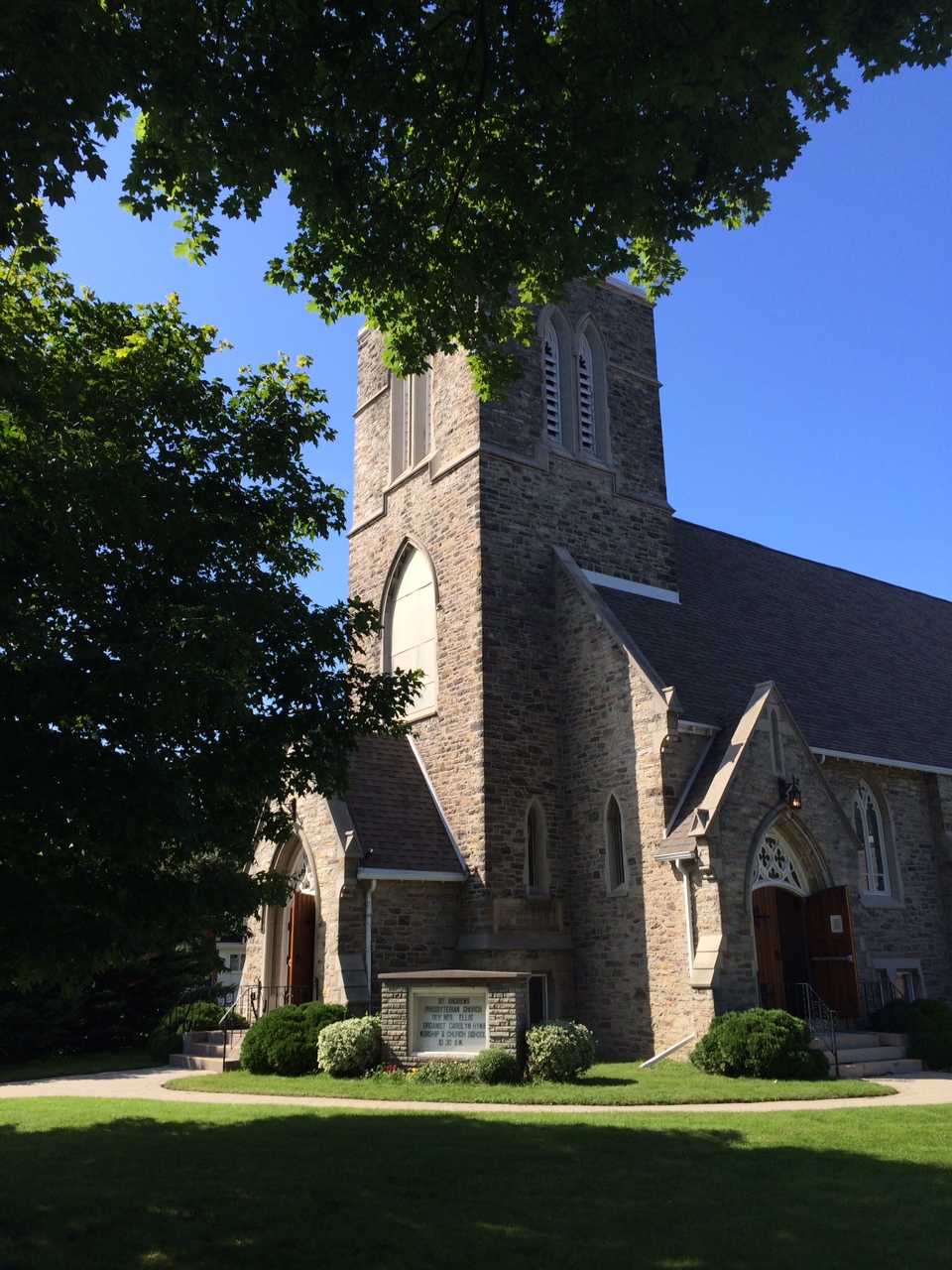
St. Andrew's Presbyterian Church
St. Andrew’s Cobourg is part of the Presbyterian Church in Canada. Our congregation was first established in 1833, and continues to serve the community in Cobourg and beyond.
Donate to St. Andrew's
Thank you for visiting St. Andrew’s. It’s our prayer that this sermon was helpful to your walk of faith. We would ask you to prayerful consider donating to the mission of St. Andrew’s. You can make an online donation through our website.